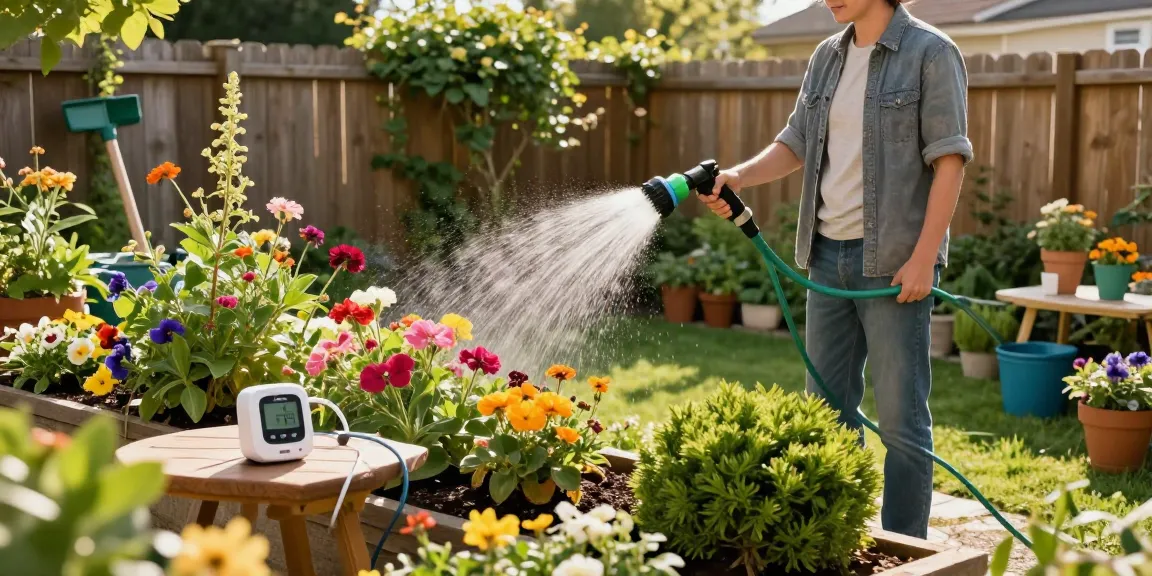
When Jenna moved into her suburban home last spring, she found a patchy front lawn and a water bill that jumped every summer. Her yard is narrow, shaded by a maple on one side and full sun on the other — two different watering needs. She tried daily short sprays from a hose and ended up with shallow roots and soggy areas. The better option was to match the setup to each problem area: deep, infrequent watering for the sun strip and lighter, more frequent moisture for the shaded side. That precise matching is what produces a lawn that looks good and doesn’t waste water.
Diagnose your lawn: the real problems that ruin schedules
Start by naming the specific challenge. Common problems that break schedules are compacted soil, uneven sun exposure, mixed grass types, and poor drainage. For example, a 1960s clay soil will hold water but limit root growth; watering it for 10 minutes every day will only encourage surface roots. Conversely, sandy soil in a newer neighborhood can drain so quickly that short, frequent watering never reaches the root zone.
Quick diagnostic checklist
- Soil type test: dig a 6-inch hole — if it compacts like a tennis ball, you’ve got clay; if it crumbles, it’s loam or sand.
- Shade mapping: note hours of sun on each area (full sun = 6+ hours, part shade = 3–6 hours, shade = <3).
- Compaction test: push a screwdriver into the soil — if it’s hard, aerate before changing schedule.
- Drainage test: dig a 12-inch hole, fill with water, and see how long it takes to drain. Over 24 hours = poor drainage.
Once you’ve diagnosed the issue, pick the right approach. A small lawn with mixed exposure often benefits from a couple of mobile sprinkler heads on separate timers; a large, uniform lawn deserves an in-ground automated system controlled by a WiFi timer. A WiFi timer from RainPoint can handle multiple zone schedules so each strip gets exactly what it needs.
Design a schedule that actually works for different yard types
“Once-a-day” or “every-other-day” mantras aren’t universal. The goal is to water deeply enough to wet the root zone (usually 4–6 inches for cool-season turf, 6–8 for warm-season) but infrequently enough to encourage roots to go downward. Here are targeted examples and schedules based on scenarios:
Small suburban lawn (under 1,500 sq ft)
Problem: mixed sun and shade; homeowner runs a hose 10 minutes daily and complains of soggy spots. Solution: split the lawn into two zones and water early morning, 2–3 times per week for deep soak. In sun areas, aim for 20–25 minutes per zone; shaded zones need 10–12 minutes. Use a mobile sprinkler or a simple oscillating head and move it between zones as scheduled.
Large open lawn (over 5,000 sq ft)
Problem: manual watering misses spots and wastes time. Solution: install a zoned in-ground system with a smart controller. Program 2–3 days per week with run times long enough to deliver 0.5–1.25 inches per session depending on soil — usually 30–45 minutes per zone. Smart controllers adjust for weather, so you don’t water before or after rain.
Table: Sample weekly times for common soils and grass types
Yard TypeSoilSessions/WeekTypical Minutes/Session (per zone)Small sun stripLoam2–320–25Shaded lawnClay1–210–15Large turfSandy315–20
These are starting points. Use a simple tuna-can test: place cans around the zone while you run the sprinkler to measure inches applied. Adjust until most cans show a uniform depth. If you want more step-by-step guidance for a repeatable plan, you can follow a lawn watering schedule that actually works which lays out how to measure and tweak your routine by soil and season.
Precise tactics that cut water waste without stressing grass
Smart timing and small tech upgrades stop waste. For instance, EPA WaterSense-certified smart irrigation controllers can save 8%–20% on irrigation water use, and in some cases homeowners save up to 15,000 gallons per year depending on landscape size and climate (EPA WaterSense). So targeted measures pay off.
Less-obvious tips professionals use
- Cycle-and-soak: break a long run time into two passes separated by 30–60 minutes to avoid runoff on slopes or compacted soils.
- Micro-zoning: group sprinklers by similar sun and soil conditions, not just by convenience. A shaded corner and a sunny strip shouldn’t share a zone.
- Seasonal adjustments: reduce frequency in cooler months and increase duration in peak summer heat — but always verify with soil probe checks.
- Rain-delay logic: if 0.25" or more of rain fell overnight, skip that day. Smart timers automate this.
For homeowners who want to offload the math, a WiFi sprinkler timer such as the RainPoint model lets you set cycle-and-soak programs, create micro-zones, and receive weather-based adjustments without daily babysitting.
Specialty areas: match the right system to the right problem
Not every part of your yard needs the same solution. Pick equipment by task, and match schedules accordingly.
Vegetable beds and flower beds
Problem: overhead sprinklers encourage disease on foliage and waste water. Solution: install drip lines or soaker hoses with short, frequent sessions. For a 10x10 vegetable bed, run drip for 20–40 minutes twice a week in warm weather; adjust by plant type — tomatoes need deeper, less frequent water than lettuce.
Potted plants and containers
Problem: pots dry out quickly and demand constant attention. Solution: use slow-release self-watering spikes or a micro-drip network tied to a timer that runs for 10–30 minutes daily in hot weather. This steadier supply avoids the yo-yo of drought then overwatering when you remember the plants.
Flower beds and borders
Problem: fine roots and mulch require consistent moisture near the root zone. Solution: a soaker hose under mulch on a short schedule — 30–60 minutes, 2–3 times a week depending on soil. That gentle, long-duration application soaks the root zone without wetting the foliage.
RainPoint positions itself as a scenario irrigation expert by offering the right product for each setup: a portable sprinkler for small lawns, a WiFi controller for large yards, drip kits for vegetables, and soaker hoses for beds. Choosing the right device is half the battle; programming it to those soil-scenario specifics gets the results.
Track performance and tweak: measurement methods that work
After you implement a schedule, verify performance with simple tools. The tuna-can test mentioned earlier tells you applied depth. A soil moisture probe or screwdriver to 4–6 inches reveals if moisture reached roots. And keep an eye on turf health: firm roots that resist a light tug indicate a healthy established turf; turf that lifts easily means shallow rooting and a need for deeper, less frequent watering.
Record one month of watering, weather, and turf response. If you’re on a municipal watering schedule, align your program with allowed days but still cycle-and-soak to cut runoff. Many homeowners find they can reduce sessions once roots establish; for example, a newly seeded cool-season lawn might need light, frequent moisture for germination, then transition to twice-weekly deeper watering after 6–8 weeks.
Practical, data-driven tweaks and the right gear for each scenario — from mobile sprinklers to a smart WiFi controller — are what turn trial-and-error into a reliable routine. When you match setup to problem and measure the outcome, you’ll finally have a reliable system that saves water and keeps your lawn thriving.